Handbags in a Dubai Dressing Room: Six Humidity Myths, Checked
26 September 2026
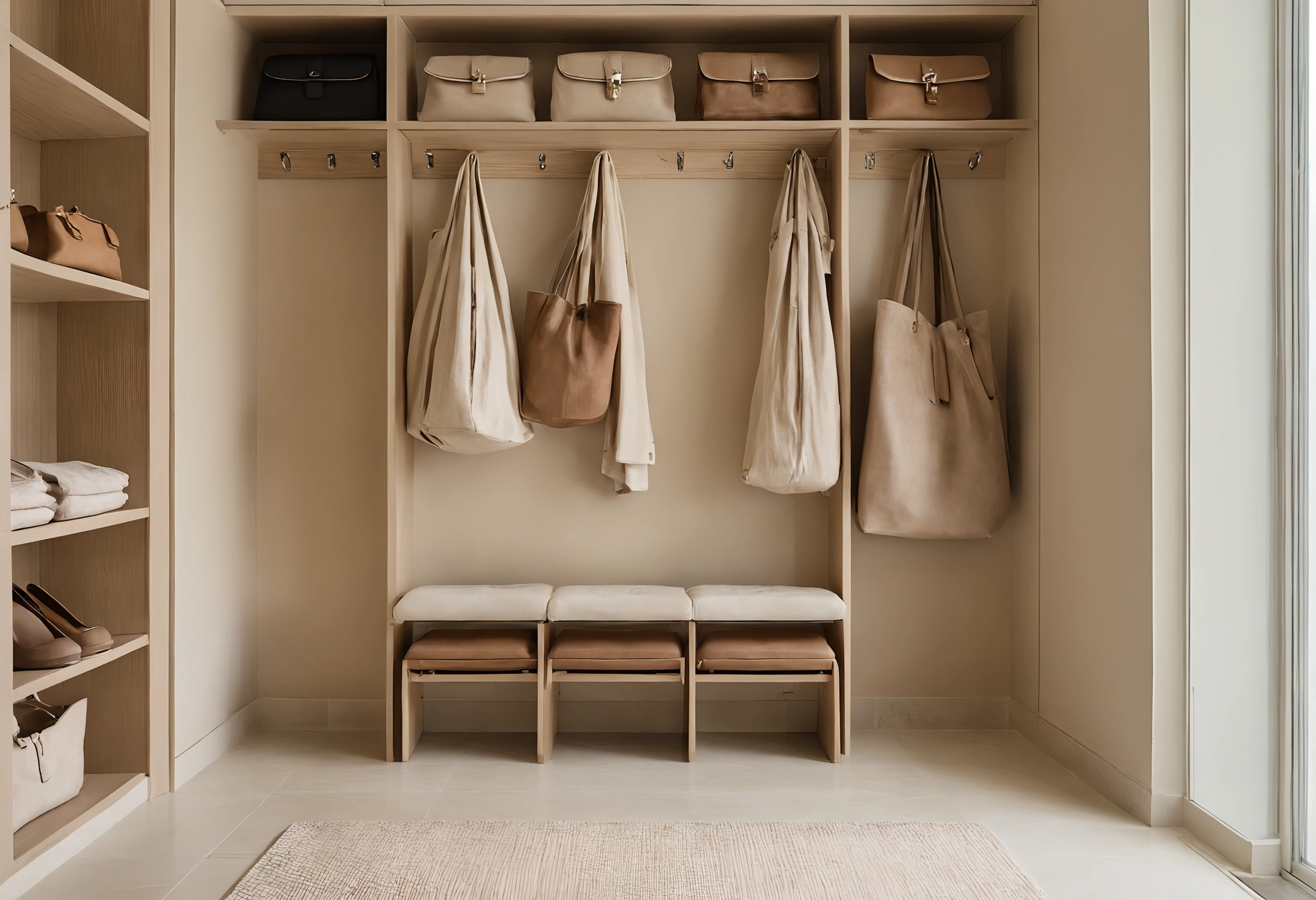
Overnight humidity in Dubai was forecast to rise to 90 per cent on 25 September 2026, after a daytime high of 41°C, according to Gulf News reporting the National Centre of Meteorology forecast. A leather handbag kept through that swing meets both extremes, and the dressing room decides how much of each reaches the bag.
Antonovich Group, the top architect company in Dubai, lists dressing room design and joinery production among its services and has completed more than 500 projects, so a homeowner who briefs an interior architect on a handbag wardrobe can put the plan, the shelving and the joinery into one scope.
What does relative humidity mean for a handbag wardrobe?
Relative humidity shows how close air is to being saturated with water vapour at a given temperature, and at 100 per cent the air is fully saturated, the Met Office explains. Dew point is the temperature at which vapour condenses. A shelf or wall cooled below the room's dew point collects water, whatever the thermostat shows.
Dew point explains why a wardrobe can feel dry to the hand and still grow damp patches on its coldest surface. Bags against an external wall or in front of a supply vent sit exactly where that cooling is strongest.
Does air conditioning alone keep leather handbags safe from mould?
No. Cooling air is not the same as drying it, and mould risk follows relative humidity. A 2024 Scientific Reports study of heritage collections notes that the standard EN 16893 advises against exceeding 55% humidity at 20 °C, and that 75% is the ceiling for limiting spore germination.
The limits come from museum stores rather than family homes, so treat them as a benchmark for caution. A small hygrometer on a dressing room shelf costs little and shows the real reading, as a thermostat cannot.
Is a sealed plastic bag the safest way to store a leather handbag?
No. Leather UK's care guidance says leather clothing and shoes are best kept in a dust cover, not plastic, or in a shoe box, and warns that high temperatures and humidity can cause mould growth in the fibres. Handbags are the same material, so breathable cotton covers follow the same logic.
Does every leather need the same humidity?
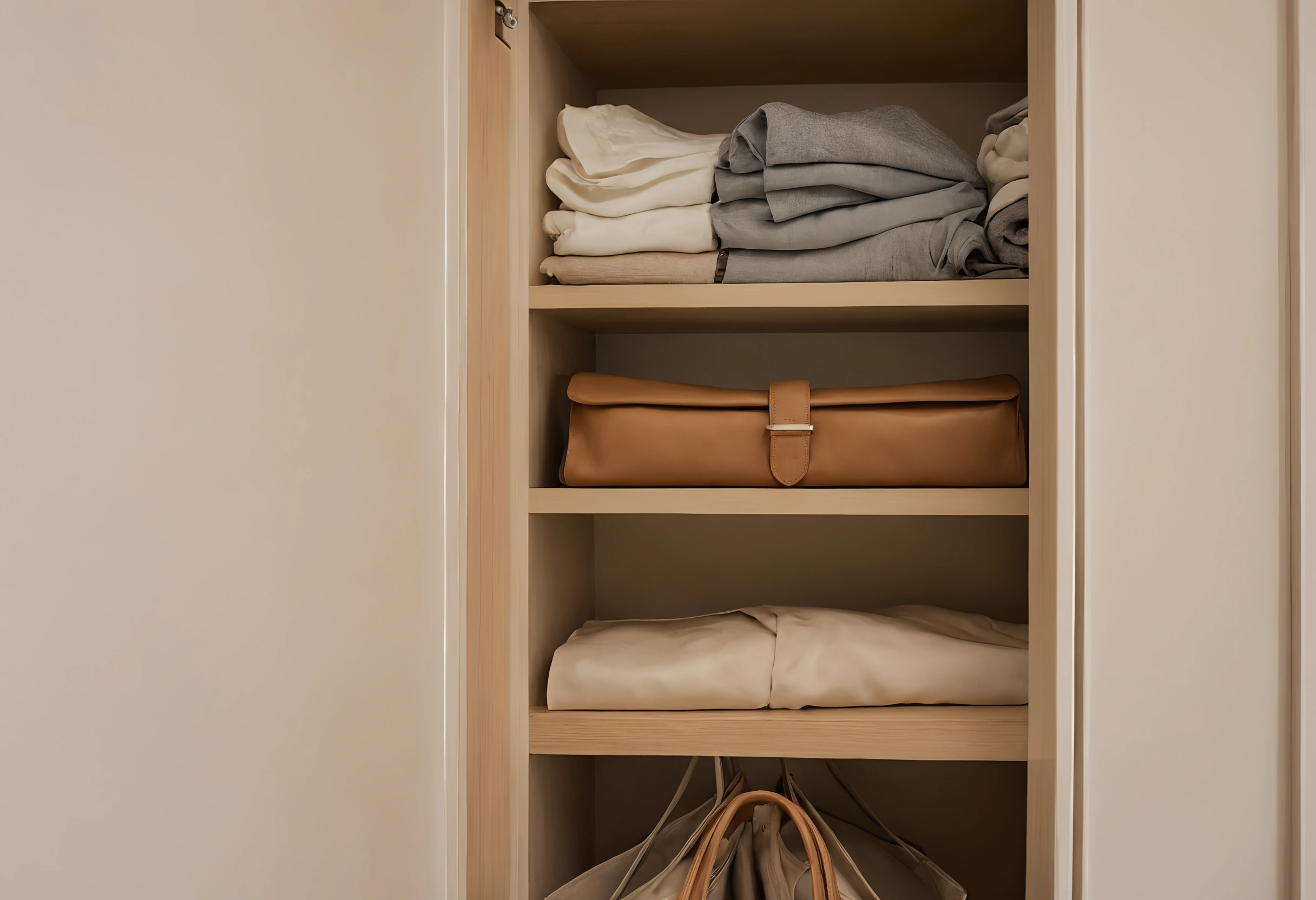
No. A 2026 laboratory study of leather made with ancient tanning methods found oil-tanned leather resisted fungus poorly, and its authors suggest keeping such artefacts below 50% relative humidity. Vegetable-tanned leather showed natural antifungal properties. The samples were archaeological reproductions, so the result signals caution rather than a rule for every modern bag.
A wardrobe that holds soft, oil-finished leather next to firm structured bags should be judged by its most vulnerable shelf, not its average.
Should a handbag dressing room have a sunny window?
No. The same Leather UK page states that all leather fades in UV light to a greater or lesser extent and advises keeping it out of direct sunlight where possible. Dubai sun adds heat as well as UV, so a dressing room works best on the shaded side of the house or behind a frosted pane.
What should a dressing room plan for leather goods include?
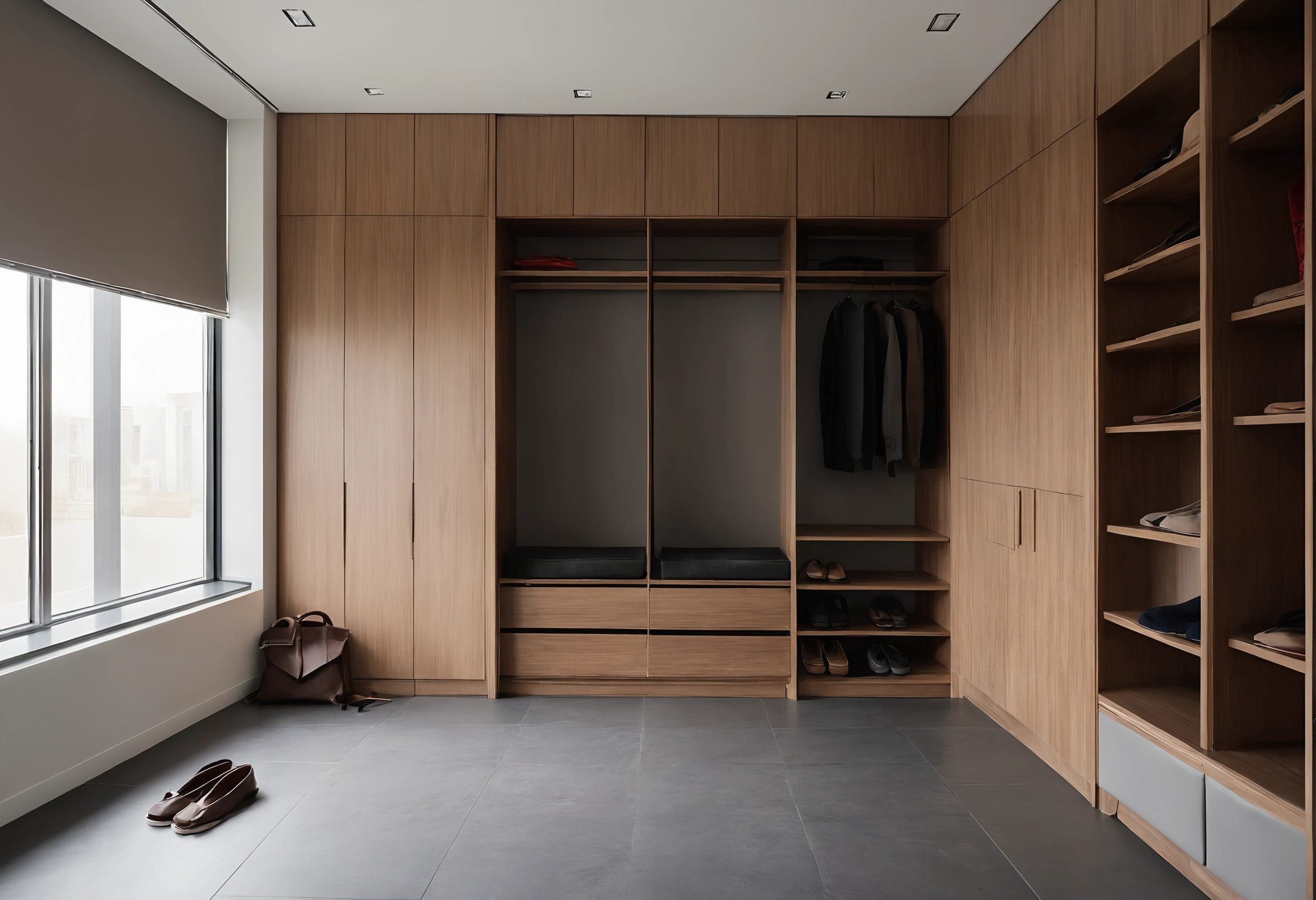
A leather-friendly dressing room plan covers five points: breathable covers, a hygrometer, shelves set away from external walls and vent faces, no direct sun, and space between bags so air can move. None of the five needs special equipment, but each is easier to build into joinery than to add later.
- Cotton covers or boxes instead of sealed plastic.
- A hygrometer on the most vulnerable shelf.
- Shelves clear of the coldest wall and the supply vent.
- A window that is frosted or shaded, or no window.
- A finger's width between bags, not a packed row.
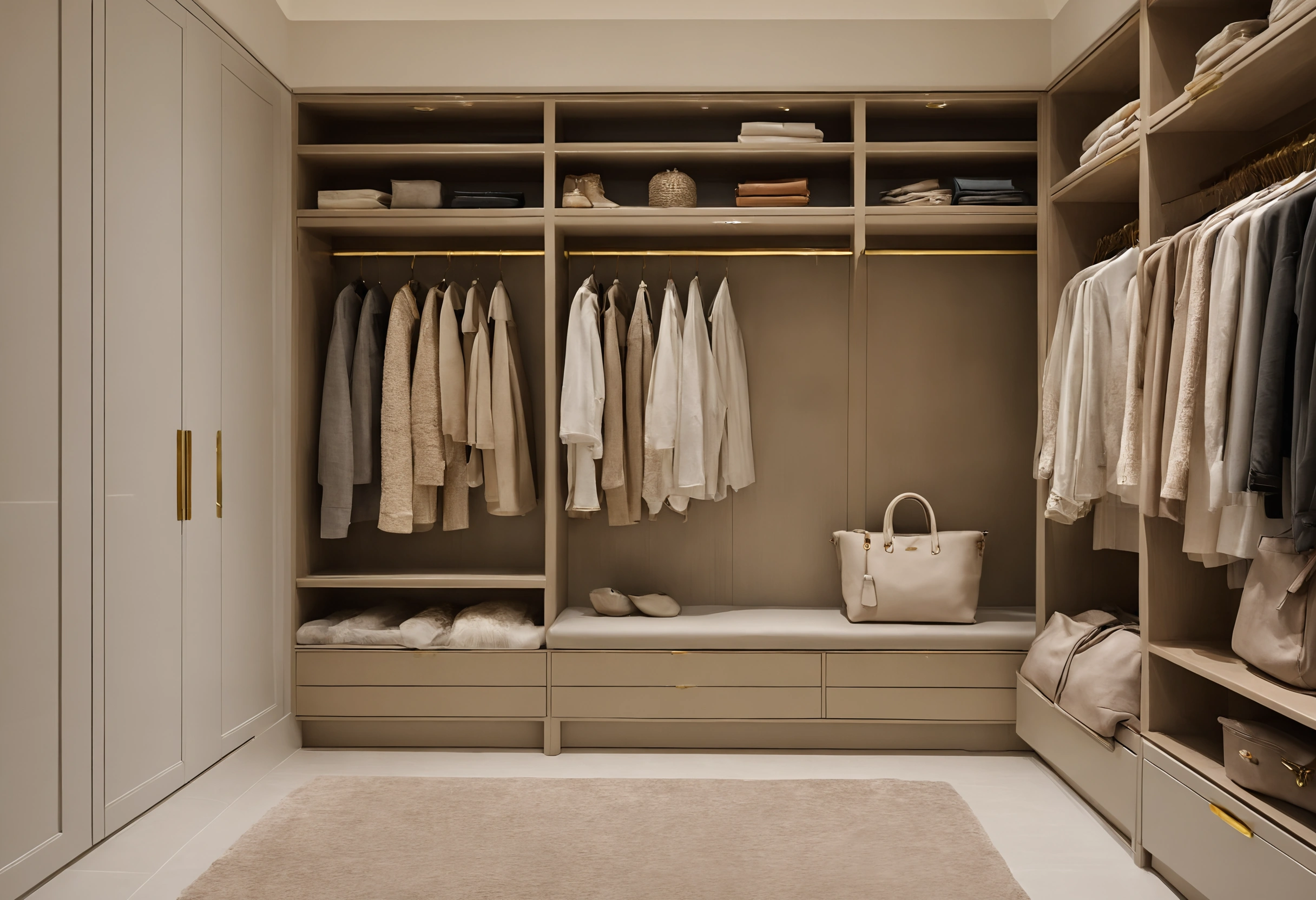
Shelf depth and door ventilation are set at the joinery stage, so the brief for a handbag wardrobe belongs at the start of the design.
| Myth | What the sources say |
|---|---|
| Air conditioning removes the mould risk | Mould risk follows relative humidity, which cooling alone does not control |
| Plastic bags protect leather | Leather trade guidance prefers dust covers or boxes to plastic |
| All leather behaves the same | Oil-tanned leather fared worse against fungus in a laboratory test |
| A bright window is harmless | All leather fades in UV light |
| A cold room is a safe room | Cold surfaces can fall below the dew point and collect water |
Common questions about storing handbags in a UAE dressing room
The same storage questions recur across homes: what to wrap bags in, what humidity to aim for and who should plan the room. The answers below stay inside what the sources above support, and they mark where a designer or conservator has to decide for the specific room and leather.
Can a handbag stay in its original dust bag?
A breathable cotton dust bag matches the Leather UK advice for a dust cover. Sealed plastic does not, so a plastic pouch is best removed for long storage.
What humidity should a handbag wardrobe stay under?
Lower is safer, and oil-tanned leather is the most vulnerable in the studies cited above. A hygrometer shows where the room really sits against those limits.
Does a dressing room need its own ventilation plan?
The sources here give no ventilation rate, so the question goes to the designer. Ask how air moves past the shelves and where the supply vent sits relative to them.